Hi again! I would like to update you on some of the things that were happening last month.
The Hispanic community at St. Barnabas Parish in Arden is beginning a new stage. During November I had a meeting with the pastor and his staff for faith formation. They had a fear that if we started a Spanish faith formation program, that we would be dividing the parish in the long run. Right now they have nothing for the Hispanics. We openly talked and shared. At the end, we came to a great conclusion: Let the Hispanics begin with the Bi-lingual catechism (the one that I had written, and which is being used in other parishes), and together we would work during these coming two years in trying to integrate the two communities. There isn't anything in the diocese to guide us, so we will be "pioneers" in a way. What I liked best was that we can work together towards a greater goal: how to build one parish community with two or more languages and cultures. Once we get started with the Bi-lingual catechism, it will be very important for me to work with the English speaking side of the parish. They are treading "unknown waters" as they open up to the Hispanics, and I am so proud to see them go forward in their openness.
Later in the month I had asked for people to become catechists. The response was great: 10 men and women, and most of them are young. I am now beginning to train them.
The Hispanic community of St. Joan of Arc in Candler is continuing to grow. Never has the parish had so many Hispanics at Mass. The pastor is extremely happy as I am too. But what most moves me is to see the enthusiasm of the parishioners. Practically all of them are new, and they have a great desire to form a community. We are now preparing for the first Feast of Our Lady of Guadalupe at this parish. This will be a great moment to welcome new members and to consolidate what they are doing.
Many of the adults are not going to Communion. So, this coming week we are having a meeting so that they can talk to me about this. I know something good is going to come out of this because so many of them expressed a lot of interest to assist and to talk about it.
Last month one of the saddest moments was the meeting with the sheriff on the issue of him working with I.C.E as an immigration agent in the county. But, we have learned that he had been quite moved by what the Hispanics had to say at last month's meeting at St. Eugene Parish, and he is open to work together with the Hispanic leaders to find a practical solution to this problem. He seems to be a good and compassionate man. May God guide us together on this issue.
Antonio is meeting with the leaders of the Hispanic organizations of the area to prepare this meeting and also to prepare a January meeting with all the clergy of all the churches and synagogues of the area to support the Hispanics. This will be a key moment in our church and society.
As regards to giving the Spiritual Exercices to the core members of Campus Ministry at UNC-A, they have finished the "pre-Exercices" work and they will begin the Exercices around the middle of January. They have asked to form a "buddy-system" to support one another better during this spiritual journey. Please rememberr them in your prayers. They are a great group of young men and women.
Now for the new activities:
The biggest event was the Cursillo that Paul Brant and his team gave in the Asheville Vicariate. It was great to have Paul, as another member of IMCM, to come and help out.
I would like to share some reflections on this: First, Paul is a great Jesuit and he works in a team with others. He has trained an excellent group of men to help him give these Cursillos. It was good for me to see how they all worked as one team, and how those who had been more time in Cursillos empowered those who had not been in them that long. It was good to see that it wasn't Paul's work, but the Team's work, and Paul was definitely a part of this team. This seems to be our way as Jesuits of working wherever we are. One of the laymen, Gerardo, alias "El Pelon", is one great animator. Secondly, the Cursillos themselves are an adaptation of the First Week of the Spiritual Exercices. The themes were good, logical, and in progressive order. They were put within the context of 'We are all the Church' and the spirit behind them was to make new evangelizers of the men who lived the Cursillo for the first time. The 15 new participants from the Asheville Vicariate were moved and motivated to continue.
Thirdly, the Cursillos have a way to continue through weekly support groups with an easy format (Piety, Study and Action). The men, as they leave the Cursillo, are encouraged to participate under their pastor in the ministries of their parish; and they become "yeast" in the parish.
November was a good month to get together with Jesuits. Ricardo Greeley came up to visit me and we spent all one day driving along the Blue Ridge Parkway seeing the beauty of the Fall and sharing our life stories. Here are some photos of that day. The next week I met up with Ricardo and together we went to visit Paul and Bruce Bavinger (we are the 4 Jesuits of IMCM in North Carolina). We had lunch and talked especially about the Cursillos. It was good to get together.
Other activities: The bishop came and the Hispanic youth that I was preparing received the Sacrament of Confirmation. I was not so happy about all the process of their formation (I wanted more of a team, but it didn't happen that well), but at the end I was so happy to see them integrated in youth groups and in parish ministries. It was good to see the sacrament continue in their lives.
After the Mass for the Gay and Lesbian Retreat at Maggie Valley, I was invited again to give a day of Recollection for the Gays and Lesbians of Asheville. Again, it was a very moving experience.
As I told you last month I am writing a small book (booklet?). I am one of 4 people. We meet at our Jesuit parish in Charlotte once a month. Each one of us is adapting the Spiritual Exercises to real needs of the people according to our own experiences and talents. One woman is a hospital chaplain and she is writing on finding God in the "Experience of Loss", based on 3 stories of disabled people; it is a moving book. Another woman is writing on how to adapt the First Week of the Exercises to youth. She has an uncanny way of introducing them into contemplation. A man is writing on how Gays and Lesbians can find God in their lives... and in their Church.
I am a catechist. So I am writing one for parents, grandparents and older brothers and sisters so that they can share their faith and spirituality with the child in their family. It is csompletely based on the Spiritual Exercises and has fun (and profound at the same time) activities for each month. It is a very practical guide for the older person and the child to enter into their own spiritual journey, where -surprisingly- they both begin to mentor each other on their way. I will give more details on this next time. Until then, God bless.
Sunday, December 9, 2007


Friday, November 30, 2007
When Latinos want to pray, don't get in their way!
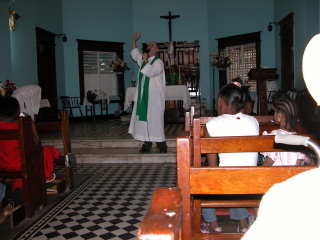
A year ago last September, Latino parishioners of a local church whose doors were closing came to see me and ask if the Jesuits at Boston College could help them find a new spiritual home. My first reaction was that the parish, St. Ignatius where I've been pastor for the past 18 years didn't have the pastoral resources to respond to the request. Even though I've been working on my Spanish for a few years, I'd never had an immersion experience and was doubtful whether I could really respond in an appropriate way. I told them that I would think and pray about it. (In other words, I wanted to avoid the request :-) But the leaders were persistent and asked me again and told me that they had signed up in the parish but were attending the English liturgies. I took it to prayer again and came up with a solution where we would have Mass in Spanish once a month. This seemed to please the folks and we started with the help of some of the Jesuits from BC from Spanish-speaking countries. We even had a celebration of Guadalupe with a Mariachi Band, presided over by Juan Carlos Henriquez from Mexico.
Given the persistence of the community, however, they asked if we could do more. The next response was to have Liturgies in Spanish alternating with bi-lingual liturgies at Noon. I ordered bi-lingual missalettes and the adventure really had begun. With the arrival of Misael Meza from Colombia who is doing his doctorate at BC in philosophy, a genuine pastoral outreach became a reality. Now we have Mass in Spanish most weeks and a bilingual Mass once a month. We are also beginning to offer other pastoral services to the community which is still small but growing. The leaders who came to ask me about what we could do for them, I invited to join our Pastoral Council so they are actively involved in the life of the parish. This summer they planned a celebration of the variety of "platos y comidas" from their different countries and invited the whole parish. Great celebration! I'm regularly presiding and preaching in Spanish or bi-lingually which is pretty amazing for a gringo who has never had an immersion experience. This fall the parish sponsored an amazing program on the issue of Immigration with a special focus on the challenges facing our Latino brothers and sisters. Beginning in January I have a pastoral associate from Colombia, S.A.who works in one of our parishes coming to work with our community as she learns English. All of this is to say when you say "Digo, Si, Senor" you never know the grace that will come your way.
Robert VerEecke, SJ frvereec@bc.edu
Paul Brant, SJ -- Cursillo in North Carolina
In Our Lady of Guadalupe Parish we’re gearing up for our patronal feast. We priests are left behind in a cloud of smoke as the laity click in on their annual routine. Our novenario is 18 days long, and two images of the Virgen are circulating in the homes and trailer park in the four counties which our Parish touches. There will be thousands of fresh roses in the sanctuary and around the statue of Our Lady on the day we celebrate (December 9) and the Feast itself (December 12). Julio Flores has organized his whole family – we speeded up rosary production to give him the 50 he requested.
I still hope to insert something about immigration into the annual Posadas which have already been scheduled. It’s the season of Penance (Communal Reconciliation) services, which limits my personal participation.
Bill Ameche and Ricardo Greeley and Bruce Bavinger and I had a mutual visit in Newton Grove and lunched at Diane’s, one of the two sit-down restaurants in Newton Grove. Bill is a real promoter of Jesuit get-togethers, and they are always renewing and inspiring.
The Cursillo de Cristiandad
Bill Ameche and I had been together just the weekend before for the Cursillo which our Raleigh Diocese team put on for the 17 men from the Asheville Vicariate at the lovely Camp Daniel Boone outside Canton, NC. Bill’s summary: “It’s the First Week.” Well, yes, and no. In a future installment, I’ll lay out my interpretation.
I will have assisted in three Cursillos as spiritual director in only seven weeks by this time next Monday. I’ve been working hard with the Teams to firm up and make more routine the preliminaries (registrations, room assignments, daily schedules, etc.) so that there’s more time during the Three Days for talking with candidates and Team (apart from the 15 hours of Confessions), and sleep. So much is left to the last minute that could be handled ahead of time.
Another 100 men will have had an in-depth encounter with Our Lord, many will have made life-changing decisions and re-enter their ambientes familiares and situaciones del trabajo with a “new look.” The challenge is to help them maintain it and let it grow, and that is the challenge that we will be facing more earnestly.
We are preparing for two Cursillos for Hispanic Women in January and February.
Developments on the “church planting” front
Beulah Hill Christian’s pastor regretfully informed me that we wouldn’t be able to hold our Sunday afternoon Mass in their sanctuary. His Board decided to advance the renovation schedule. I took this disappointment to the Lord, and had just about decided to propose suspending the mission in Four Oaks for the winter months as the only practical option when I received a call from Joey Yow, the Methodist pastor in Four Oaks. He had told me two months ago not to get our hopes up, because their congregation has so many Sunday afternoon activities that he couldn’t see how we could be fitted in regularly.
Joey, pastor at FOUMC for more than 20 years and a colleague and friend of mine for 15 years since I was pastor in Smithfield, had taken the request to prayer and then met a couple of times with his Administrative Board and they decided to”make room” for us. We meet December 4, and are praying for a positive outcome to our covenant-making for an 18 months tenancy. Our mission’s patron is St. Francis Xavier.
Diocesan and Deanery activities
At out last meeting of the priests serving Hispanic community, I made a presentation to some them of the segment which we include in our Parish marriage preparation on Natural Family Planning. Over the years I’ve learned a great deal about NFP as a spirituality of mutuality and responsible parenthood which is ideal for couples who really want their marriage to be “in the Lord” in all aspects. It also undoes machismo .
A dozen years ago on one of my visits to Peru, I looked for the best A/V materials in Spanish and edited them down to a 40 minute presentation which still works to hook the interest of the many Hispanic couples preparing for the sacrament. [Parenthetically, at Fordham (1987-89) I invited couples who were following this spirituality to give witness to alumni couples preparing for marriage at the University Church, and also found a great deal of interest]. My co-presenters at Fordham were my dentist, Charlie (Vinnie’s brother) Potter and his wife, Sheila.
My co-presenter now is Ken McElynn, MD who in excellent colloquial Spanish animates the couples with a gripping power-point presentation contrasting the “culture of life” with the “culture of death” which really speaks to these couples. He does a follow-up session at which he coaches them in the preliminaries of the Billings method.
The presentation I made to the 10 priests was well-received, and we are moving now to have materials provided in Spanish, starting with the Newton Grove Deanery.
I look forward each month to a meeting with a support group of Diocesan priests. for a couple of hours we share about our ministry and personal pilgrimages. I am the Jesuit in the ointment. We travel as many as three hours each way for the meeting and meal. With the exception of Bishop-emeritus Gossman, I have known all of the priests in the group since or before) their ordination, one of them the senior priest of the Diocese, Fr. Paul Byron, since 1946.
Immigration
More raids, more detentions and deportations. That’s the summary. It adds up to more misery - more constant inimical pressure on the whole immigrant community. Now, Senator Dole has convinced local law enforcement is several counties to participate as deputies to the immigration service (ICE) and they are doing their new work to the accompaniment of much publicity which amounts to harassment of the largely Mexican target immigrant community.
Adrián Cerino was signed up for the Cursillo this weekend. He called to say that he couldn’t go. His two brothers, a cousin and a friend, all gainfully employed, were hunting. Someone reported them, and because immigrants can’t legally possess firearms, the sheriff called ICE and they were immediately deported. Adrián in the space of one hour became the guardian of his sister’in’law and nephew.
Terror? Maybe. Misery? Certainly. Justice? ¡Olvidase! Compassion? ¡Olvidase! Reasonable? ¡Olvidase!
Paul Brant, sj
I still hope to insert something about immigration into the annual Posadas which have already been scheduled. It’s the season of Penance (Communal Reconciliation) services, which limits my personal participation.
Bill Ameche and Ricardo Greeley and Bruce Bavinger and I had a mutual visit in Newton Grove and lunched at Diane’s, one of the two sit-down restaurants in Newton Grove. Bill is a real promoter of Jesuit get-togethers, and they are always renewing and inspiring.
The Cursillo de Cristiandad
Bill Ameche and I had been together just the weekend before for the Cursillo which our Raleigh Diocese team put on for the 17 men from the Asheville Vicariate at the lovely Camp Daniel Boone outside Canton, NC. Bill’s summary: “It’s the First Week.” Well, yes, and no. In a future installment, I’ll lay out my interpretation.
I will have assisted in three Cursillos as spiritual director in only seven weeks by this time next Monday. I’ve been working hard with the Teams to firm up and make more routine the preliminaries (registrations, room assignments, daily schedules, etc.) so that there’s more time during the Three Days for talking with candidates and Team (apart from the 15 hours of Confessions), and sleep. So much is left to the last minute that could be handled ahead of time.
Another 100 men will have had an in-depth encounter with Our Lord, many will have made life-changing decisions and re-enter their ambientes familiares and situaciones del trabajo with a “new look.” The challenge is to help them maintain it and let it grow, and that is the challenge that we will be facing more earnestly.
We are preparing for two Cursillos for Hispanic Women in January and February.
Developments on the “church planting” front
Beulah Hill Christian’s pastor regretfully informed me that we wouldn’t be able to hold our Sunday afternoon Mass in their sanctuary. His Board decided to advance the renovation schedule. I took this disappointment to the Lord, and had just about decided to propose suspending the mission in Four Oaks for the winter months as the only practical option when I received a call from Joey Yow, the Methodist pastor in Four Oaks. He had told me two months ago not to get our hopes up, because their congregation has so many Sunday afternoon activities that he couldn’t see how we could be fitted in regularly.
Joey, pastor at FOUMC for more than 20 years and a colleague and friend of mine for 15 years since I was pastor in Smithfield, had taken the request to prayer and then met a couple of times with his Administrative Board and they decided to”make room” for us. We meet December 4, and are praying for a positive outcome to our covenant-making for an 18 months tenancy. Our mission’s patron is St. Francis Xavier.
Diocesan and Deanery activities
At out last meeting of the priests serving Hispanic community, I made a presentation to some them of the segment which we include in our Parish marriage preparation on Natural Family Planning. Over the years I’ve learned a great deal about NFP as a spirituality of mutuality and responsible parenthood which is ideal for couples who really want their marriage to be “in the Lord” in all aspects. It also undoes machismo .
A dozen years ago on one of my visits to Peru, I looked for the best A/V materials in Spanish and edited them down to a 40 minute presentation which still works to hook the interest of the many Hispanic couples preparing for the sacrament. [Parenthetically, at Fordham (1987-89) I invited couples who were following this spirituality to give witness to alumni couples preparing for marriage at the University Church, and also found a great deal of interest]. My co-presenters at Fordham were my dentist, Charlie (Vinnie’s brother) Potter and his wife, Sheila.
My co-presenter now is Ken McElynn, MD who in excellent colloquial Spanish animates the couples with a gripping power-point presentation contrasting the “culture of life” with the “culture of death” which really speaks to these couples. He does a follow-up session at which he coaches them in the preliminaries of the Billings method.
The presentation I made to the 10 priests was well-received, and we are moving now to have materials provided in Spanish, starting with the Newton Grove Deanery.
I look forward each month to a meeting with a support group of Diocesan priests. for a couple of hours we share about our ministry and personal pilgrimages. I am the Jesuit in the ointment. We travel as many as three hours each way for the meeting and meal. With the exception of Bishop-emeritus Gossman, I have known all of the priests in the group since or before) their ordination, one of them the senior priest of the Diocese, Fr. Paul Byron, since 1946.
Immigration
More raids, more detentions and deportations. That’s the summary. It adds up to more misery - more constant inimical pressure on the whole immigrant community. Now, Senator Dole has convinced local law enforcement is several counties to participate as deputies to the immigration service (ICE) and they are doing their new work to the accompaniment of much publicity which amounts to harassment of the largely Mexican target immigrant community.
Adrián Cerino was signed up for the Cursillo this weekend. He called to say that he couldn’t go. His two brothers, a cousin and a friend, all gainfully employed, were hunting. Someone reported them, and because immigrants can’t legally possess firearms, the sheriff called ICE and they were immediately deported. Adrián in the space of one hour became the guardian of his sister’in’law and nephew.
Terror? Maybe. Misery? Certainly. Justice? ¡Olvidase! Compassion? ¡Olvidase! Reasonable? ¡Olvidase!
Paul Brant, sj
Brother Ricardo Greeley, SJ from Albemarle, NC. (en español)
Sin fronteras en la misión de la Compañía (segunda parte)
En mi escrito de presentación del mes pasado les compartí sobre mi trasfondo familiar y apostólico pasados, subrayando mi experiencia entre indígenas mexicanos. Allí apuntalé cuál creo puede ser mi mejor aporte a la misión de la Compañía de Jesús. Ahora les comparto sobre cómo es que llegué a Carolina del Norte y con qué realidad me encontré.
Como preparación a incorporarme al apostolado jesuita con migrantes, mi provincial me autorizó hacer unos estudios sociológicos sobre Migración, los cuales fueron desde el Servicio Jesuita a Migrantes (SJM-MEX, -www.sejemi.org-) en la ciudad de México (Enero a Marzo de 2006). Inmediatamente después me incorporé a un trabajo directo con transmigrantes centroamericanos en el estado de Tabasco a partir del Comité de Derechos Humanos de Tabasco, A.C. (CODEHUTAB, -http://www.codehutab.com/-; de Marzo a Agosto de 2006). Mientras estaba en esto, en Junio de 2006 tuve mi primer contacto con la Conferencia Jesuita para el Ministerio Hispano (JHMC, por sus siglas en inglés), en donde conocí a varios jesuitas, quienes por cierto, abrían de influir en mi incorporación a este proyecto del servicio a los migrantes en un esfuerzo interprovincial, como está dicho, ahora en Carolina del Norte.
A fines de Agosto dejé Tabasco para irme a mi ‘Tercera Probación’ (etapa de formación muy importante para cada jesuita). Dentro de esta etapa, la parroquia Dolores Mission en el Este de Los Angeles, me recibió para que colaborara en el refugio o albergue para varones ‘sin-techo’ (Guadalupe Homeless Shelter), a través del cual pude conocer los otros eslabones de esta cadena del peregrinar de nuestros hermanos migrantes. (Explico esto un poquito: Durante mis años de trabajo con campesinos comprendí mucho sobre las causas que mueven a las personas a emigrar. A través del CODEHUTAB fui testigo de lo que sufren los transmigrantes que se montan en “El Tren de la Muerte” (llamado así por su peligrosidad: lugar de asaltos, abusos, accidentes). Y en Los Angeles, lugar que ha sido destino y punto de paso para millones de migrantes, vine a conocer la historia completa del vía crucis por el que pasan tantos hermanos en su lucha por conseguir mejores oportunidades de trabajo y una mejor vida, aquí en los Estados Unidos. En síntesis afirmo que a través de las historias particulares de ‘los-sin-techo’, y más a través de los inmigrantes en la calle de una ciudad súper-moderna, uno puede comprender mejor cómo opera nuestro sistema social (…), y las causas y efectos negativos de la Migración.
Ah, ¡cuánto desearía tener tiempo y más espacio en esta página para narrar detalles de las penalidades de esta gente tanto sufre, desde que tuvieron que abandonar sus tierras y a sus familias para venir a terminar y sufrir en la calle, en la derrota y en el más completo abandono! Todo esto es bien triste. Quizás se los comparta en uno de mis envíos futuros.
Estando en mi Tercer Probación pude acudir a una entrevista de trabajo para el puesto de coordinador para el Ministerio Hispano en un Vicariato dentro de la Diócesis de Charlotte, en Carolina del Norte. Desde esta visita, con la información que tuve de la zona y del contacto con el Equipo Diocesano del Ministerio Hispano, ya desde entonces me entusiasmé, pero también experimenté paz y tranquilidad al pensar desde Dios en esta posibilidad apostólica con inmigrantes. Se me clarificaba cada vez más la importancia en atender el fenómeno migratorio desde sus causas, efectos y oportunidades, desde una articulación apropiada desde las comunidades de origen, de tránsito y las de destino.
Concluida mi Tercera Probación, otra vez, como preparación para mi eventual trabajo en Carolina del Norte, mi superior provincial me pidió que primero tuviera una experiencia de trabajo propiamente pastoral con hispanos (latinos) para no llegar a la Diócesis sin saber que la vida parroquial y la cultura de los hispanos en los Estados Unidos, que son realidades tan diferentes a lo que tenemos en México. Por fortuna, de nueva cuenta Dolores Mission me recibió ya no para estar en el Albergue Guadalupano, sino estar propiamente en la pastoral. Al fin de esta rica experiencia, después de la Pascua de 2007, pude viajar a Charlotte, NC, para comenzar una nueva etapa de mi vida como jesuita.
Elegí llevarlos por el recorrido de mis experiencias apostólicas previas porque considero que aunque he estado tan cercano a las personas concretas del mundo de la migración, que tienen rostro, nombres y apellidos, aún así siento que tengo tanto más por seguir conociendo de su realidad, no sólo para poderlos comprender y alientar, sino para vislumbrar qué es lo mejor que podemos hacer para contrarrestar las causas y los efectos negativos de la migración, así como aprovechar las oportunidades que ésta también nos ofrece para un mayor servicio al Reino y la transformación social que la ética y la historia nos reclaman...
Ahora paso a citar algunas de las dinámicas y realidades que en el estado de Carolina del Norte he venido conociendo de lo que viven los inmigrantes.
Sin pretender ser exhaustivo en la presentación de las leyes y políticas que se están aplicando en Carolina del Norte, cito primero el contexto en que aquí se están endureciendo tanto las medidas anti-inmigrantes. Todos recordarán el 2006 por las discusiones y manifestaciones históricas a favor de una reforma a las leyes migratorias, así como por las expresiones contrarias, por quienes acusaban a millones de inmigrantes violando las leyes de este país. En fin, durante estas expresiones a favor y en contra de dicha reforma, se recrudecieron las acusaciones contra los inmigrantes, ya no sólo denunciando que son una carga para el Estado, que les quitan los empleos a los ciudadanos americanos, sino hasta el punto de identificarlos con criminales y terroristas. En fin, todo esto ha sido perfectamente aprovechado por los medios de comunicación y en este año electoral, por los precandidatos de ambos partidos capitalizando a su favor con el tema de migración y de los indocumentados. En este contexto, en junio del 2007 Senado rechazó avanzar hacia la reforma antes citada y desde entonces, los estados están ya pasando leyes locales que niegan derechos y servicios a los inmigrantes que no tienen número de seguro social válido (SSN), o que persiguen a los que no pueden demostrar su estancia legal aquí.
Entre otros estados, también Carolina del Norte está adoptando medidas para recortar servicios y oportunidades a los hispanos, que de entre los muchos otros inmigrantes de otras regiones del mundo, los mexicanos ocupan una significativa mayoría. Una de las maneras más efectivas contra los anti-inmigrantes ha sido la de ya no expedir licencias para manejar sin contar con el SSN. Esta medida está impactando tremendamente no solamente a la comunidad hispana, sino también al conjunto de la economía regional. Sin embargo, como este es un año electoral, los que toman decisiones están priorizando aplicar medidas que piensan les traerán mejores resultados a partidos y sus candidatos, sacrificando incluso intereses productivos y económicos.
Lo anterior se materializa en los siguientes casos. Diversas corporaciones de policía (policía del condado, state troopers, sheriff, etc.) instalan operativos en cruces de caminos, afuera de los centros de trabajo, y aún en las inmediaciones de las iglesias católicas para detener los latinos que no tienen vigente la licencia para manejar, o atrapar a los que no pueden probar su residencia legal. Estos operativos se ponen aprovechan las horas en que los inmigrantes acuden a/o regresan de sus centros de trabajo, así como los horarios del domingo en que la gente acude a sus Iglesias.
Ya son muchos los casos concretos en que estos indocumentados detenidos son entregados a la ‘Migra’ (ICE), y luego deportados. Incluso, guiados por el puro aspecto externo de la gente, la policía ha entrado a las gasolineras a pedirle a la gente sus papeles. En fin, son medidas sistemáticas con que la comunidad latina está siendo perseguida, siendo que es inconstitucional que la policía aplique tales medidas. De esto trata la ley “287g”, que quieren extenderla a más condados, la cual ya es vigente en un puñado de condados de NC.
Por otra parte, mucha gente ha estado recibiendo cartas con citatorios a las diferentes oficinas de gobierno: de parte del juez, o por parte de DMV, así como de ICE. Y tenemos casos en que al acudir a los citatorios, la gente es atrapada por la Migra, incluso llevándose consigo también a aquellos que iban acompañando a la persona a su cita, y que tampoco tenían ‘papeles’.
En este contexto, la afluencia a los supermercados, a “la pulga”, a la Iglesia misma, etc. ha disminuido muchísimo. La gente tiene miedo de ser detenida y deportada. Algunos incluso no están acudiendo a trabajar.
Estas situaciones político-legales son pues el escenario al que vengo llegando a NC. Es triste constatar que grupos que más simpatizan con estas políticas anti-inmigrantes son incluso católicos, que a su vez provienen de papás inmigrantes de hace medio siglo, un siglo o más tiempo aquí. Pero también nos animamos cuando encontramos a anglos que reconocen la historia que está detrás de cada inmigrante y los ven como seres humanos y les dan la bienvenida –quisiéramos fueran más para que vivamos mejor nuestro testimonio cristiano–.
Varios de los momentos más alentadores recientes que tengo son los relacionados a que los miembros del Ministerio Hispano Diocesano estamos esforzándonos por organizar mejor nuestra solidaridad y la lucha contra la separación de familias, lograr que los jóvenes que tienen ganas de seguir estudiando lo puedan hacer sin restricciones, formar a la gente en sus obligaciones cívicas y lograr una fraterna convivencia entre la diversidad cultural y la unidad parroquial. De hecho, hemos ya concluido nuestra planificación al respecto.
Entre las muchas cosas que queremos lograr, una es articularnos mejor con esas personas de buena voluntad que están comprometidas con esta causa, como es el caso de muchas Iglesias Cristianas –generalmente muy humildes en NC–, y que incluso algunas de ellas han mostrado un protagonismo público mucho más decido y valiente, el cual nos sirve de ejemplo y testimonio cristiano.
En mi siguiente aporte les compartiré cómo se están impulsando estas cosas en el ámbito de las parroquias de mi Vicariato de Albemarle.
Hno. Ricardo Greeley, SJ
En mi escrito de presentación del mes pasado les compartí sobre mi trasfondo familiar y apostólico pasados, subrayando mi experiencia entre indígenas mexicanos. Allí apuntalé cuál creo puede ser mi mejor aporte a la misión de la Compañía de Jesús. Ahora les comparto sobre cómo es que llegué a Carolina del Norte y con qué realidad me encontré.
Como preparación a incorporarme al apostolado jesuita con migrantes, mi provincial me autorizó hacer unos estudios sociológicos sobre Migración, los cuales fueron desde el Servicio Jesuita a Migrantes (SJM-MEX, -www.sejemi.org-) en la ciudad de México (Enero a Marzo de 2006). Inmediatamente después me incorporé a un trabajo directo con transmigrantes centroamericanos en el estado de Tabasco a partir del Comité de Derechos Humanos de Tabasco, A.C. (CODEHUTAB, -http://www.codehutab.com/-; de Marzo a Agosto de 2006). Mientras estaba en esto, en Junio de 2006 tuve mi primer contacto con la Conferencia Jesuita para el Ministerio Hispano (JHMC, por sus siglas en inglés), en donde conocí a varios jesuitas, quienes por cierto, abrían de influir en mi incorporación a este proyecto del servicio a los migrantes en un esfuerzo interprovincial, como está dicho, ahora en Carolina del Norte.
A fines de Agosto dejé Tabasco para irme a mi ‘Tercera Probación’ (etapa de formación muy importante para cada jesuita). Dentro de esta etapa, la parroquia Dolores Mission en el Este de Los Angeles, me recibió para que colaborara en el refugio o albergue para varones ‘sin-techo’ (Guadalupe Homeless Shelter), a través del cual pude conocer los otros eslabones de esta cadena del peregrinar de nuestros hermanos migrantes. (Explico esto un poquito: Durante mis años de trabajo con campesinos comprendí mucho sobre las causas que mueven a las personas a emigrar. A través del CODEHUTAB fui testigo de lo que sufren los transmigrantes que se montan en “El Tren de la Muerte” (llamado así por su peligrosidad: lugar de asaltos, abusos, accidentes). Y en Los Angeles, lugar que ha sido destino y punto de paso para millones de migrantes, vine a conocer la historia completa del vía crucis por el que pasan tantos hermanos en su lucha por conseguir mejores oportunidades de trabajo y una mejor vida, aquí en los Estados Unidos. En síntesis afirmo que a través de las historias particulares de ‘los-sin-techo’, y más a través de los inmigrantes en la calle de una ciudad súper-moderna, uno puede comprender mejor cómo opera nuestro sistema social (…), y las causas y efectos negativos de la Migración.
Ah, ¡cuánto desearía tener tiempo y más espacio en esta página para narrar detalles de las penalidades de esta gente tanto sufre, desde que tuvieron que abandonar sus tierras y a sus familias para venir a terminar y sufrir en la calle, en la derrota y en el más completo abandono! Todo esto es bien triste. Quizás se los comparta en uno de mis envíos futuros.
Estando en mi Tercer Probación pude acudir a una entrevista de trabajo para el puesto de coordinador para el Ministerio Hispano en un Vicariato dentro de la Diócesis de Charlotte, en Carolina del Norte. Desde esta visita, con la información que tuve de la zona y del contacto con el Equipo Diocesano del Ministerio Hispano, ya desde entonces me entusiasmé, pero también experimenté paz y tranquilidad al pensar desde Dios en esta posibilidad apostólica con inmigrantes. Se me clarificaba cada vez más la importancia en atender el fenómeno migratorio desde sus causas, efectos y oportunidades, desde una articulación apropiada desde las comunidades de origen, de tránsito y las de destino.
Concluida mi Tercera Probación, otra vez, como preparación para mi eventual trabajo en Carolina del Norte, mi superior provincial me pidió que primero tuviera una experiencia de trabajo propiamente pastoral con hispanos (latinos) para no llegar a la Diócesis sin saber que la vida parroquial y la cultura de los hispanos en los Estados Unidos, que son realidades tan diferentes a lo que tenemos en México. Por fortuna, de nueva cuenta Dolores Mission me recibió ya no para estar en el Albergue Guadalupano, sino estar propiamente en la pastoral. Al fin de esta rica experiencia, después de la Pascua de 2007, pude viajar a Charlotte, NC, para comenzar una nueva etapa de mi vida como jesuita.
Elegí llevarlos por el recorrido de mis experiencias apostólicas previas porque considero que aunque he estado tan cercano a las personas concretas del mundo de la migración, que tienen rostro, nombres y apellidos, aún así siento que tengo tanto más por seguir conociendo de su realidad, no sólo para poderlos comprender y alientar, sino para vislumbrar qué es lo mejor que podemos hacer para contrarrestar las causas y los efectos negativos de la migración, así como aprovechar las oportunidades que ésta también nos ofrece para un mayor servicio al Reino y la transformación social que la ética y la historia nos reclaman...
Ahora paso a citar algunas de las dinámicas y realidades que en el estado de Carolina del Norte he venido conociendo de lo que viven los inmigrantes.
Sin pretender ser exhaustivo en la presentación de las leyes y políticas que se están aplicando en Carolina del Norte, cito primero el contexto en que aquí se están endureciendo tanto las medidas anti-inmigrantes. Todos recordarán el 2006 por las discusiones y manifestaciones históricas a favor de una reforma a las leyes migratorias, así como por las expresiones contrarias, por quienes acusaban a millones de inmigrantes violando las leyes de este país. En fin, durante estas expresiones a favor y en contra de dicha reforma, se recrudecieron las acusaciones contra los inmigrantes, ya no sólo denunciando que son una carga para el Estado, que les quitan los empleos a los ciudadanos americanos, sino hasta el punto de identificarlos con criminales y terroristas. En fin, todo esto ha sido perfectamente aprovechado por los medios de comunicación y en este año electoral, por los precandidatos de ambos partidos capitalizando a su favor con el tema de migración y de los indocumentados. En este contexto, en junio del 2007 Senado rechazó avanzar hacia la reforma antes citada y desde entonces, los estados están ya pasando leyes locales que niegan derechos y servicios a los inmigrantes que no tienen número de seguro social válido (SSN), o que persiguen a los que no pueden demostrar su estancia legal aquí.
Entre otros estados, también Carolina del Norte está adoptando medidas para recortar servicios y oportunidades a los hispanos, que de entre los muchos otros inmigrantes de otras regiones del mundo, los mexicanos ocupan una significativa mayoría. Una de las maneras más efectivas contra los anti-inmigrantes ha sido la de ya no expedir licencias para manejar sin contar con el SSN. Esta medida está impactando tremendamente no solamente a la comunidad hispana, sino también al conjunto de la economía regional. Sin embargo, como este es un año electoral, los que toman decisiones están priorizando aplicar medidas que piensan les traerán mejores resultados a partidos y sus candidatos, sacrificando incluso intereses productivos y económicos.
Lo anterior se materializa en los siguientes casos. Diversas corporaciones de policía (policía del condado, state troopers, sheriff, etc.) instalan operativos en cruces de caminos, afuera de los centros de trabajo, y aún en las inmediaciones de las iglesias católicas para detener los latinos que no tienen vigente la licencia para manejar, o atrapar a los que no pueden probar su residencia legal. Estos operativos se ponen aprovechan las horas en que los inmigrantes acuden a/o regresan de sus centros de trabajo, así como los horarios del domingo en que la gente acude a sus Iglesias.
Ya son muchos los casos concretos en que estos indocumentados detenidos son entregados a la ‘Migra’ (ICE), y luego deportados. Incluso, guiados por el puro aspecto externo de la gente, la policía ha entrado a las gasolineras a pedirle a la gente sus papeles. En fin, son medidas sistemáticas con que la comunidad latina está siendo perseguida, siendo que es inconstitucional que la policía aplique tales medidas. De esto trata la ley “287g”, que quieren extenderla a más condados, la cual ya es vigente en un puñado de condados de NC.
Por otra parte, mucha gente ha estado recibiendo cartas con citatorios a las diferentes oficinas de gobierno: de parte del juez, o por parte de DMV, así como de ICE. Y tenemos casos en que al acudir a los citatorios, la gente es atrapada por la Migra, incluso llevándose consigo también a aquellos que iban acompañando a la persona a su cita, y que tampoco tenían ‘papeles’.
En este contexto, la afluencia a los supermercados, a “la pulga”, a la Iglesia misma, etc. ha disminuido muchísimo. La gente tiene miedo de ser detenida y deportada. Algunos incluso no están acudiendo a trabajar.
Estas situaciones político-legales son pues el escenario al que vengo llegando a NC. Es triste constatar que grupos que más simpatizan con estas políticas anti-inmigrantes son incluso católicos, que a su vez provienen de papás inmigrantes de hace medio siglo, un siglo o más tiempo aquí. Pero también nos animamos cuando encontramos a anglos que reconocen la historia que está detrás de cada inmigrante y los ven como seres humanos y les dan la bienvenida –quisiéramos fueran más para que vivamos mejor nuestro testimonio cristiano–.
Varios de los momentos más alentadores recientes que tengo son los relacionados a que los miembros del Ministerio Hispano Diocesano estamos esforzándonos por organizar mejor nuestra solidaridad y la lucha contra la separación de familias, lograr que los jóvenes que tienen ganas de seguir estudiando lo puedan hacer sin restricciones, formar a la gente en sus obligaciones cívicas y lograr una fraterna convivencia entre la diversidad cultural y la unidad parroquial. De hecho, hemos ya concluido nuestra planificación al respecto.
Entre las muchas cosas que queremos lograr, una es articularnos mejor con esas personas de buena voluntad que están comprometidas con esta causa, como es el caso de muchas Iglesias Cristianas –generalmente muy humildes en NC–, y que incluso algunas de ellas han mostrado un protagonismo público mucho más decido y valiente, el cual nos sirve de ejemplo y testimonio cristiano.
En mi siguiente aporte les compartiré cómo se están impulsando estas cosas en el ámbito de las parroquias de mi Vicariato de Albemarle.
Hno. Ricardo Greeley, SJ
Wednesday, November 21, 2007
Welcome Ana Maria Goonan!

Just in time for Thanksgiving, Ana Maria Goonan has begun work for the Maryland Province and the Institute as part time Administrative Assistant to Bill Rickle, SJ, who has been whining about his need for such help for so long that even he got tired of it! Ana Maria will be working part time in the Institute office three days a week on Mondays, Wednesdays and Fridays.
A native of Peru, she has been living in the United States for just a few years. She comes to us with more than twenty years experience in the supervision and evaluation of social and pastoral ministry programs for the Peruvian Bishops Conference. She also has a bachelor's degree in business adminstration. We know that in the future she will be happy to help us all with her administrative skills!
She can be reached at 410-617-5673 and AMGoonan@loyola.edu
She can be reached at 410-617-5673 and AMGoonan@loyola.edu
Friday, November 9, 2007
Novenario in North Carolina: Fr. Bruce Bavinger, SJ
 Hello, all. I am Bruce Bavinger, SJ, of the Maryland Province, and working in Wilson and Rocky Mount, North Carolina. So good to see the contributions of Mark McGregor, SJ and Javier San Martín, SJ, as well as those of Bill Ameche, SJ, Shay Auerbach, SJ, Ricardo Greeley, SJ and Paul Brant, SJ. The insights and perceptions of their articles encourage and energize me.
Mark’s piece on Las Posadas reminds me of the great period of graces that is ahead, especially for the Hispanic people and those walking with them. I even want to call them “December graces,” since the birth of Christ and the feast of Our Lady of Guadalupe give a “magic” to the coming month, for gathering together, strengthening family, and building and rebuilding community.
In one of my communities, where the need for increasing leadership and participation in ministries is a key goal this year, we’re using an idea that Bill Ameche once told me about, that of the “novenario,” or gathering in prayer for nine days prior to Our Lady’s feast on December 12th. The nine days, usually with rosary and a few special prayers, are already celebrated by some as a personal devotion, but as a parish community activity, it offers a chance for people to “have church” in their homes, with members of the parish and with others whom the hosts, acting in a sense as “leaders,” invite. (In doing this, we’re building somewhat on a strength, because many of the current leaders pray the rosary as a group weekly in each other homes.) For each night of the novenario, a statue of Our Lady of Guadalupe will be brought to the house for the 7pm prayer, the host will lead one of the mysteries of the rosary, with the other mysteries, prayers, and hymns led by others present. The host will keep the statue of Our Lady in the house overnight and bring it to the next house the following day’s prayer. We were able to get three women and their families who had never hosted such an event before to volunteer to hold the prayer in their homes.
The tradition of the Posadas, from December 16th to 23rd, of which Mark spoke offer us a further chance to increase involvement in the parish. Posadas have already been celebrated in both of my parish communities for a number of years. This year, in the community that is doing the novenario, we can again look for new folks to hold a Posada for the evening at their homes. We are also going to make one or perhaps two of the Posadas into a broader community activity in the parish hall with several people in charge.
Let me share a note with you about my other community, where healing and unity are the key goals for the year. I’m currently meeting individually with the head of each ministry to find out how things are going there, what is helping, what is hurting. In these conversations, there may be mentioned a person with whom there is difficulty, or a practical misunderstanding that can be resolved more easily. From there, I want to bring together one or two pairs of people where there is little trust, and help call them into a different place, as far as possible. After that we may have a general meeting of all the ministers around a positive theme, perhaps the theme of increasing participation in the ministries. We really need the magic of December grace to change hearts. Please pray that through Mary’s intercession and the blessing of Christ born among us, this grace may be granted!
POSADA & the Posadas Project
POSADA & the Posadas Project-
Celebrating our Faith, Telling Our Stories of Hospitality and Solidarity with Migrants this Advent. By Mark McGregor, S.J.
Celebrating our Faith, Telling Our Stories of Hospitality and Solidarity with Migrants this Advent. By Mark McGregor, S.J.
In a search for shelter, one can knock on many doors before being invited in. This story of Joseph and Mary, as celebrated in Las Posadas, is also the story of thousands of unaccompanied immigrant youth who seek to be reunited with family or to find safety here in the U.S. This story is the story of many Latino immigrants who identify so directly with the Mexican Advent procession that is Las Posadas. This knocking is the story that many immigrants across the world know to well. At the heart of Las Posadas is the joyous and profound message of the Incarnation - that God has crossed over every border to make a home with humanity. This message is the heart of POSADA, an award winning documentary on unaccompanied immigrant children.
Last month the 10th annual Cinema and Religion International Film Festival awarded its "Religion and Human Rights Award" to POSADA. I am Mark McGregor, a Jesuit priest who is at Santa Clara University. I directed and produced POSADA as a response to the Catholic Campaign for Immigration Reform. I invite you to view POSADA's trailer; to learn about how faith and justice speak to the hearts and minds, especially in young people. I also invite you to join a project that aims at getting people to participate in Las Posadas and to advocate for immigrants this Advent.
My motivation to do POSADA came out of a conversation with Amalia Molina, author of "The Power of Love/El Poder del Amor" her autobiographical account of when she and her husband Jose were detained for over 16 months in an immigration detention center.
 When I asked Amalia about her openness to tell her powerful story, she replied, "Mark, primero los jovenes." "Mark, first the youth." That began the pre-production of POSADA in the late summer of 2005. I knew that I wanted to portray a hopeful portrait of migrant youth in what was a time of sparse hope. I knew three youth who came to the U.S. from Central America and are living symbols of hope, and I invited them to tell their stories in POSADA.
POSADA was shot on location in Southern California and Mexico in 2005 and early 2006. I meant it as a way of telling the stories of immigrants. I meant it to respond to a question posed to Jesus, "Who is my neighbor?" The whole debate on immigration was then, and is still now dominated by another question,
 "Who is the illegal?" In telling the stories of Johny, Wilber, Densi and Amalia, POSADA bears witness to profound human rights questions for children as it celebrates faith and justice. You can view POSADA’s two-minute trailer at Loyola Productions, Inc. website, www.loyolaproductions.com. To order a copy of Posada, call (310) 398-4281, or order via the above listed website.
In addition to my work leading the production of POSADA, I am Coordinator of the Posadas Project. This a nation-wide project that promotes participation in Las Posadas and links this journey of faith to advocate for immigrants, especially to children. I produced and directed Posada, a film that weaves the stories of unaccompanied immigrant children and Las Posadas. In the Posadas Project I offer you an enthusiastic invitation to share the faith and to tell our stories of faith and justice, and I have some resources to share with you to help your community to the hospitality and solidarity of Las Posadas. Why turn to Las Posadas?
“I was a stranger, and you welcomed me.”
The Church offers compelling reasons for immigration reform, and the moral voice founded in the person of Jesus Christ and in encountering Christ in the migrant is unshakable. Las Posadas articulates this in an active communal experience. As part of the liturgical season, it is, at some level, familiar to all who follow Christ.
It speaks to the Church’s immigrant heritage and celebrates it in light of faith. While it has been part of Mexican and Mexican-American Advent celebrations for centuries, it opens up a spiritual journey beyond nationalities. Las Posadas retells the Christmas story as a communal experience, it helps people to find themselves in that story and engages them in questions of charity and justice.

Procession: the Church’s way of awaking the imagination
In the spring of 2006 Church efforts motivated millions to attend rallies that called for immigration reform. Envision, an Advent when millions process in candlelit in America’s neighborhoods and public spaces, walking with Joseph, Mary and their guardian angel. As the procession moves between houses, people pray the rosary or sing “Angels We have Heard on High.” Imagine the laughter when piñatas are broken and festive food is shared after the procession has found posada at a welcoming home. Now is the time to organize peaceful, faith-led celebrations across this land.
Announcing Good News: The Angels Award
Envisage every diocese publicly recognizing people and organizations who have been outstanding in their advocacy, service or accompaniment of immigrants. The Posadas Project will recognize a person and organization for such witness with the “Angels Award.” The Project proposes that each diocese, parish or organization recognize persons and organizations for such witness with the “Angels Award.”
Posadas Project resources to help celebrate Las Posadas
A bilingual website: http://www.posadas-project.com/ provides information and resources, including interactive features, forums and pages to help organizations hold Las Posadas. In the coming months there will be more educational resources made available. The “In 2007” page allows people to input specific information about celebrating Las Posadas. The links vary from fun links, like how to build a piñata and links about scripture and immigrants. I am very much interested in hearing from you, as you may also be another resource who can inform friends, neighbors and family about the Posadas Project. Please share this with leaders in your faith community. Let’s join our voices and walk the walk.

The Posadas Project invites every:
A) diocese to celebrate Las Posadas this Advent, especially on the weekend of December 22 and 23;
B) bishop to celebrate Las Posadas locally or in a region;
C) diocesan JFI or social justice committee to name and give Angel Awards;
The Posadas Project is independent of but fully supportive of the Catholic Campaign for Immigration Reform. Based at Santa Clara University’s Bannan Center for Jesuit Education, I will be working with professors, students and advocates here and in the community to build solidarity with immigrants through storytelling, media arts and advocacy.
We have a month before Advent begins and six weeks before the start of Las Posadas. Let’s not rely on the media to take the lead in telling our stories of faith and justice. We can however, tell journalists of our stories through the Angels Award winners and of many celebrations of Las Posadas that will be celebrated in the U.S. and many other places in North America. See you at Las Posadas!
Subscribe to:
Posts (Atom)
